These are often plastic bins that are compact and ideal for smaller gardens. They are good for keeping the pest out, retain heat, and require manual turning and mixing.
How to do it
- Ensure your bin is placed in a sunny spot and place the bin directly on the soil so worms can enter. Place small twigs and small branches at the bottom for good air flow.
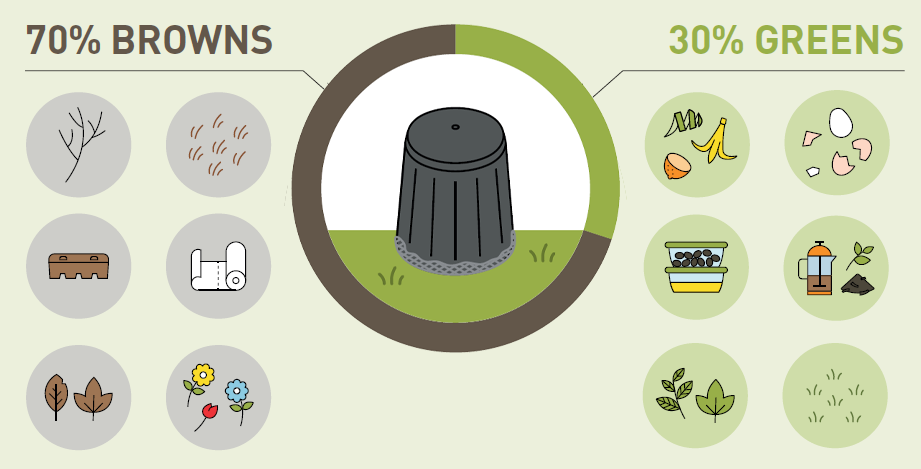
- For faster and adequate composting, it is beneficial to alternate the stacking of both green and brown materials. Good proportion would be 30% green matter and 70% brown matter.
- Add materials on a daily/weekly basis. Ensure there is sufficient air and water to help with the decomposition of the material. Add more brown materials if there is too much water and keep the lid on during the rain.
- Can be ready for use after 6 months. Timing for compost to be ready depends on outdoor temperatures, ratio of green and brown matters, and moisture level.
Tips
- Turn your composting on regular basis but avoid mixing bottom materials with top materials.
- Do not compost weeds, pet wastes, cooked foods, oils, fats, Citrus fruits, bread and meat.
- Compost smells bad if there is too much water or not enough air. Add more brown materials or frequently turn the top layer
- If your compost is slow to break down, there is not enough green material or air. Add more green material and turn the pile regularly
- If the compost is dry, add more water and wet materials.
 ENM on Facebook